
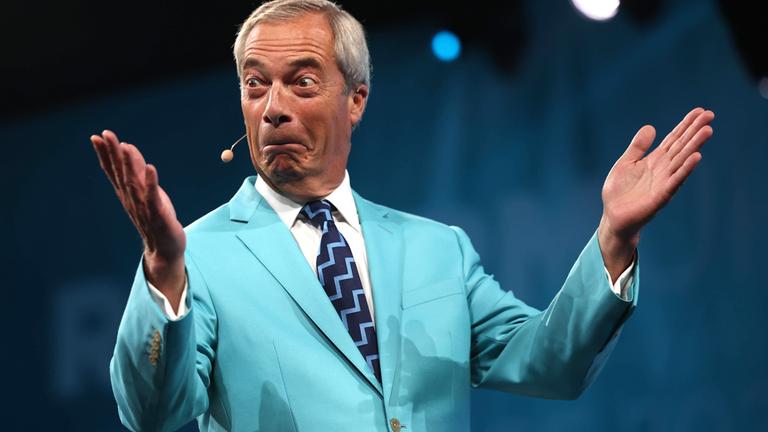
Anti-racists will be disappointed by the size of the vote for Reform UK in elections in England, Scotland and Wales on May 7.
Reform won 1,454 council seats in England – having previously held just two of the contested seats – and took control of 14 of the 136 contested councils to add to the 10 the party already leads since elections a year ago.
It won in two county councils (Essex and Suffolk) and 12 district councils: Thurrock, Havering, Sandwell, Walsall, Newcastle-under-Lyme, St Helens, Calderdale, Wakefield, Barnsley, Sunderland, South Tyneside, and Gateshead.
Reform won more votes than any other party in a further 12 councils: Birmingham, Bradford, Burnley, Cannock Chase in the West Midlands, East Sussex, Havant, the Isle of Wight, Kirklees, Norfolk, North East Lincolnshire, Nuneaton and Bedworth, and Rochford (Essex), and it was the joint largest party in Hartlepool and West Sussex.
It also made significant gains in Wigan, where it won 24 of the 25 seats up for election, and Tamworth (Staffordshire) where it won all nine contested seats.
Labour lost 1,496 seats in England, considerably more than the 1,068 the party held on to, and lost control of 38 councils, while the Tories lost 563 seats and control of six councils.
In Wales, Reform went from having virtually no presence to winning 34 Senedd seats out of 96 and finishing second to Plaid Cymru which won 43. Labour was reduced to holding just nine seats in Wales after more than a century as the country’s largest party.
In Scotland, Reform gained 17 MSPs – the same as Labour – all elected via the regional list, although theScottish National Party (SNP), which won 58 of the 129 seats at Holyrood, immediately made clear Reform would be excluded from any governing coalition.
Disillusion with Labour and its failure to show signs of improving people’s lives after two years in office, and distaste for the Tories who inflicted 14 years of austerity, meant Reform was always likely to do well by posing as an alternative to both – although the party is composed overwhelmingly of ex-Tories.
But for all its successes, Reform did not do as well in the elections as its leaders predicted. In Wales, for example, Reform leaders had hoped to win overall but fell more than six percentage points short of Plaid Cymru with 29% of the vote. In Scotland, Reform failed to win any constituency seats and won only two more seats than the Green Party. Reform won less than 17% of regional list votes on a turnout of 53%, meaning fewer than one in 10 Scots voted for Farage’s party.
Reform UK’s results in England
Labour lost heavily in England, with Reform winning seats in the Northeast, Northwest and Midlands. But the Green Party won 18% of the vote, coming second overall in England, and in the Southeast it was the Liberal Democrats rather than Reform which won at the expense of the Tories.
Labour’s defeat to Reform in former solidly Labour areas such as Hartlepool in the northeast, Tameside on Merseyside and Redditch in the West Midlands showed Reform can count on significant support for its divisive propaganda in some working-class communities.
In Blackburn in the Northwest, Reform won nine council seats as Labour lost 11. But Independent candidates won six seats and outnumber Reform on the council with 17 councillors to Reform’s nine, while Labour retains 20.
In Oldham, Reform captured 13 council seats giving it 16 out of the total of 60 – so no overall control – with Labour losing eight. Elsewhere, Labour held on to control of Wigan, Salford and Halton near Liverpool sincetwo thirds of the seats were not up for election.
Labour was wiped out in Birmingham, losing 48 of the 65 seats it held which were up for election. That was hardly a surprise after the council provoked and declined to resolve a 16-month bin strike. Yet Reform, though it won 23 seats, was not the sole beneficiary. The Green Party won 17 seats, taking its total to 19, and independent candidates – many of them pro-Palestine – won 14 seats.
Reform won two-thirds of seats in Essex, previously solidly Tory and home to the parliamentary seat of Conserative leader Kemi Badenoch and several other leading Tories. But in other areas, Reform fell short of the support it expected. The Conservatives held Harlow in Essex where Reform did not win a single seat, Broxbourne in Hertfordshire where Reform won just two seats to the Tories’ seven, and Fareham in Hampshire where Reform won just one seat to the Tories’ 11 and Liberal-Democrats’ four – all areas where Reform had expected to do well.
In London, Farage had declared the party had a “very real chance” of winning in “half a dozen” boroughs. The party’s targets included Bromley, Bexley, Barking and Dagenham, and Havering. In the event, the party woncontrol only of Havering in east London, bordering Essex. In Tory-controlled Bexley, Reform won seven seats, fewer than the nine held by Labour with the Tories maintaining control with 29 seats.
Reform did poorly in the six mayoral elections on May 7, four of them in London. It managed only fourth place in Hackney with 5%, fourth in Newham (under 9%), fourth in Tower Hamlets (8%) and third in Lewisham (8%).
The party did somewhat better in the election for Croydon mayor where it won 12% of the vote but still only came fourth, and while Reform managed second in the mayoral election in Watford with 18% it was well beaten by the Liberal Democrat candidate who polled more than 52%.
How should we assess the results?
We should not underestimate the significance of the Reform vote, achieved despite media exposure of the racist social media posts and fascist associations of Reform candidates and the incompetence of Reform-run councils such as Staffordshire. A Reform candidate in Blackburn who described Enoch Powell as ‘prophetic’, another who hailed former British Union of Fascists leader Oswald Mosley as “right 100%”, and a third in Essex who declared ‘Muslims are dirt” were among those elected.
To the right of Farage’s party, ex-Reform MP Rupert Lowe and his Restore Britain party won all 10 of the seats they contested as Great Yarmouth First in Great Yarmouth in Norfolk, which the millionaire Lowe represents as an MP despite it being one of the most-deprived areas in England.
Lowe’s success is shocking – his party has become the electoral vehicle of choice of the fascist Tommy Robinson and his supporters. However, Lowe also poses a problem for Farage. He prevented Reform taking control of Norfolk County Council, despite the Tories collapsing from 60 seats to eight and Reform winning 40 of the 84 seats. The Restore Britain leader, who has the support of US multibillionaire Elon Musk, has pledgedto stand candidates in every seat in the next elections – although this seems unlikely.
The results will increase tension within Reform between those on the far right who believe ever more extreme pledges to deport people will appeal to core supporters and those in the leadership, such as Tory defector Robert Jenrick, who want the party to act like a government in waiting, with Farage seeking to keep both factions onside while asserting his own authority.
These results cannot be dismissed as solely a protest vote. However, this was no landslide for Reform. In councils where the party won more than half the seats, Farage’s party won on average just 36% of the vote – mostly on a turnout below 50%.
Farage described the results as marking a “historic shift”. Yet in private he will be disappointed because his party polled less well than in 2025.
If the voting on May 7 had been repeated nationally, Reform would have polled 26%, with the Greens second on 18%, Labour and the Conservatives on 17% each – the parties’ lowest-ever joint share – and the Liberal Democrats 16%, with the remaining 6% going to the SNP, Plaid Cymru and independents.
By comparison, analysis of the 2025 local election results in England for a House of Commons briefing paper estimated Reform won 32% of the vote, with 19% for Labour, 18% Conservative, 16% Liberal-Democrat and 15% Green Party. Other estimates of the 2025 election vote share had Reform on 30% – either way the 2026 elections saw a decline in the party’s share of the vote.
It was inevitable that Reform would gain hundreds of new councillors on May 7 because it barely existed in 2022 when the contested seats were last up for election.
Veteran polling analyst Peter Kellner, former president of YouGov, noted days before the elections that winning 1,700 seats in England would be a “disappointment” for Reform on May 7 and that the party “will be sunk in gloom if it gains 1,400 [councillors]”. That is largely where it ended up.
Kellner suggested: “Reform could underperform statistically while looking triumphant politically. If they remain as popular as they were last May, they should win more than 2,000 seats. Much less, and this would mean that they are slipping back.”
Similarly, Professor Stephen Fisher, a political sociologist at Oxford University, estimated Reform would needto win 2,050 council seats in England to retain the momentum it showed in 2025. The party fell almost 600 seats short of that.
Labour and Reform UK
We should not assume that because Labour lost 1,400-plus seats and Reform won 1,400-plus that people simply switched votes from Labour to Reform. Voters switching from Labour to the Green Party, Plaid Cymru, the SNP or even the Liberal Democrats made a lower proportion of the vote enough to win for Reform. For example, Reform won the seat of St Peter and the Waterfront in Plymouth with just over 29% of the vote, with Labour on 28.4% and the Greens on 24.3%.
There is no way of knowing from the results exactly how voters switched between parties. We need surveys of how people voted for an accurate picture of that.
However, analyses by both the BBC and Sky News suggested a stronger correlation between a fall in the Labour vote and a rise in the Green vote than between a fall for Labour and a rise for Reform.
That would be in line with analysis by the highly regarded British Election Study which suggested only 5% of people who voted Labour at the 2024 general election switched to voting Reform in 2025, but that 10% voted for the Green Party and almost one third abstained from voting.
The Tories’ 17% share of the vote compared with 30% the last time the same set of councils were up for election in 2022. It seems plausible that much of the difference in the Tory vote will have gone to Reform.
Professors Colin Rallings and Michael Thrasher of Nuffield College, Oxford, writing in The Sunday Times noted that although Reform came out on top “its support has plateaued since last year”. They concluded Reform’s “undeniably impressive seat and council gains may flatter its overall level of public support”.
Labour politicians are divided over whether the Greens or Reform present the bigger threat to the partyelectorally. But this misses the most important point – the threat Reform poses to all people of non-white British backgrounds, to women’s rights, to trade union rights, to welfare recipients, to the health service, to diversity.
But many election analysts clearly believe Reform’s support may have peaked last year. Anti-racists must ensure that becomes a reality.