Portsmouth is antifascist!
The far right mobilised in Glasgow, Tamworth, Newcastle and Portsmouth last week with dramatically different results.
In Newcastle it was reduced to a tiny gathering. Britain First managed a more substantial but hardly spectacular national mobilisation in Tamworth. The Pink Ladies and their “patriot” allies brought perhaps 150 to 200 people onto Glasgow Green. Portsmouth was much more serious, with around 500 on the anti-migrant side and a section attempting to chase anti-racists through the city.
Alongside the loose network of local “patriot” groups, established fascist organisations and online influencers, there is an attempt to construct something harder—smaller groups capable of being moved quickly, acting together and adopting the appearance of discipline.
That is the significance of Danny Tommo’s Patriot Platform experiment.
Richard Donnelly’s detailed account of Patriot Platform argues that beneath the hundreds who appeared at Dover and the broader crowd subsequently seen in Portsmouth there is a smaller layer prepared to turn out at short notice and follow Tommo’s instructions. Its useful formulation is that Patriot Platform is trying to create a “portable formation with its own habits, rituals and loyalties”.
This is not yet a fascist militia. The far right remains a network—fractured, competitive and often chaotic. But sections of that network are experimenting with forms of organisation that are more disciplined and confrontational.
Black shirts, masks and political theatre
The Daily Mail action on 9 September illustrated this particularly clearly.
Only around 35 masked men appeared. They came dressed in black, stood in ranks, followed instructions and took part in prayers and staged photographs. The demonstration looked ridiculous at points, but there was an organisational purpose inside the theatre.
Anthony Barnes—AY Audits—said he had been trusted with advance information about the Dover mobilisation, placing an important far-right livestreamer inside the communications network surrounding the operation. Jason Armstrong, associated with South London Patriots, supplied the muscular Christian rhetoric and prayers.
Tommo told participants that cash would be available afterwards.
Local actions
Glasgow—imitating the tactic, without the numbers
Around 40 supporters of the Scottish Citizens Army assembled for what they grandly called “Operation Standstill”.
Many wore black and balaclavas. They moved from Buchanan Street towards Charing Cross, claiming they intended to disrupt the evening commute.
Police contained them and the threatened citywide disruption simply did not happen. Glasgow showed that copying the imagery does not reproduce the organisational strength.
Five days later the picture on Glasgow Green was different again.
The Pink Ladies had boasted that 3,000 women would mobilise. Nothing remotely approaching that happened. A realistic working estimate is around 150–200 people on the Pink Ladies/”patriot” side. Many were men from the wider patriot scene rather than women mobilised independently by the Pink Ladies.
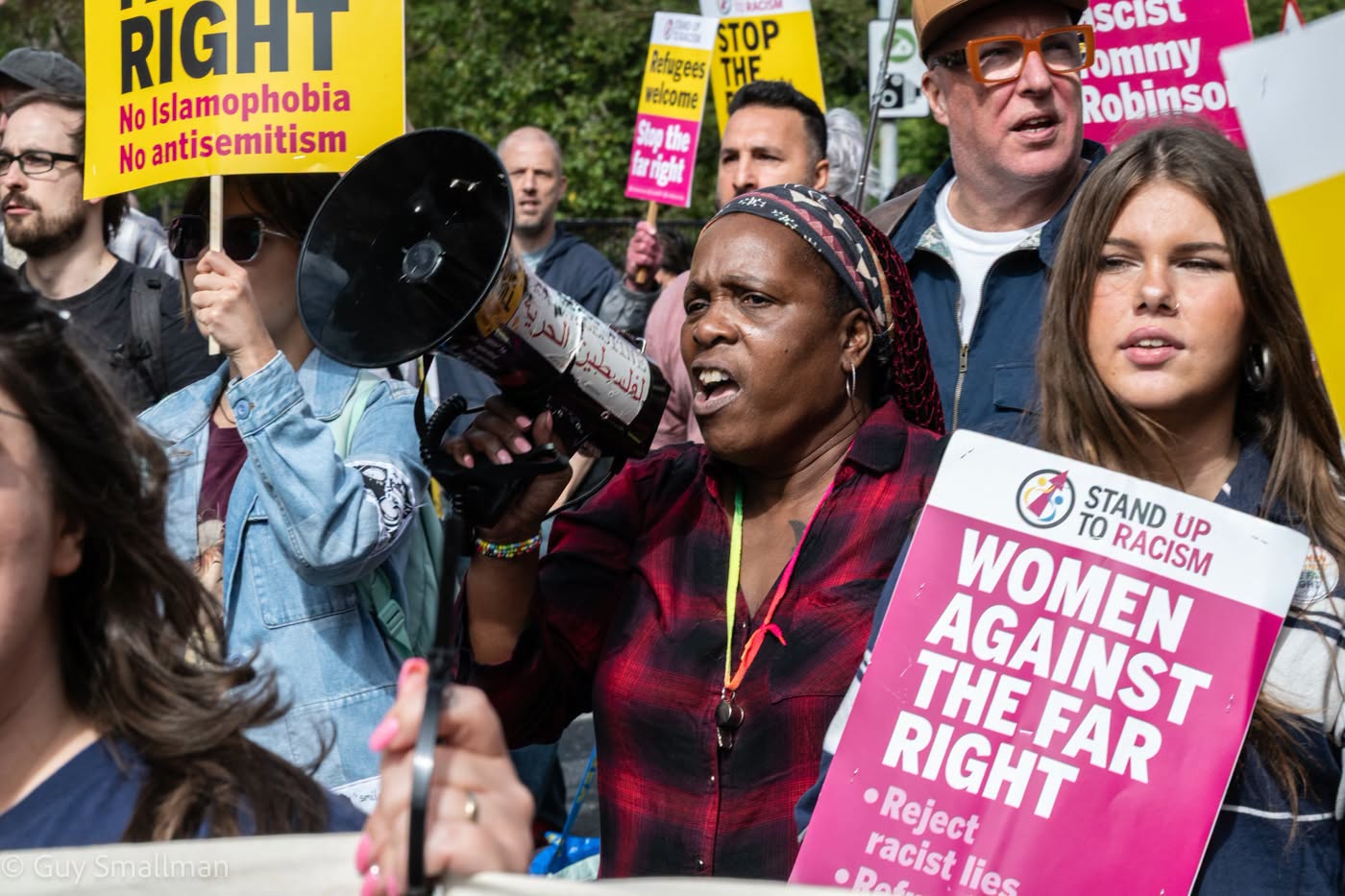
Reform figures Thomas Kerr and Audrey Dempsey attended, as did online personality Craig Houston. On the other side were Stand Up To Racism, Women Against the Far Right and trade union activists, with STUC general secretary Roz Foyer among those present.
The turnout punctured the inflated claims made beforehand. The Pink Ladies remain capable of providing a banner beneath which different sections of the Scottish right can assemble, but Glasgow gave no evidence of the thousands of previously uninvolved women their organisers had claimed were about to enter the movement.
Britain First marches—but does not break through in Tamworth
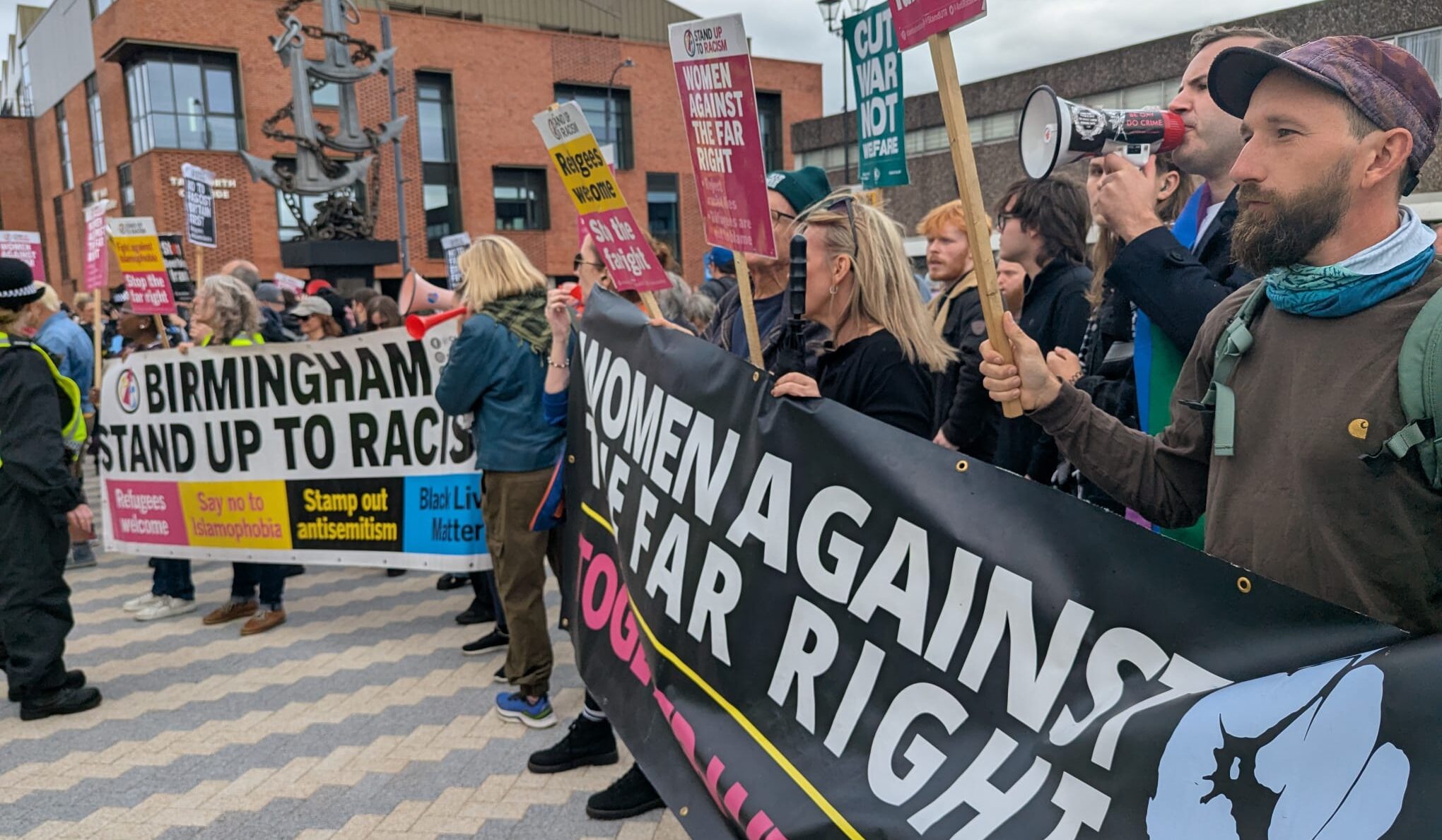
A march did take place on Saturday 12 September, demanding mass deportations. It lasted barley ten minutes! But Tamworth did not produce the breakthrough Britain First’s publicity had promised. Golding could mobilise the organisation’s established supporters and some wider “patriot” forces, but there was no evidence of a mass local uprising.
Newcastle exposes the weakness of the network
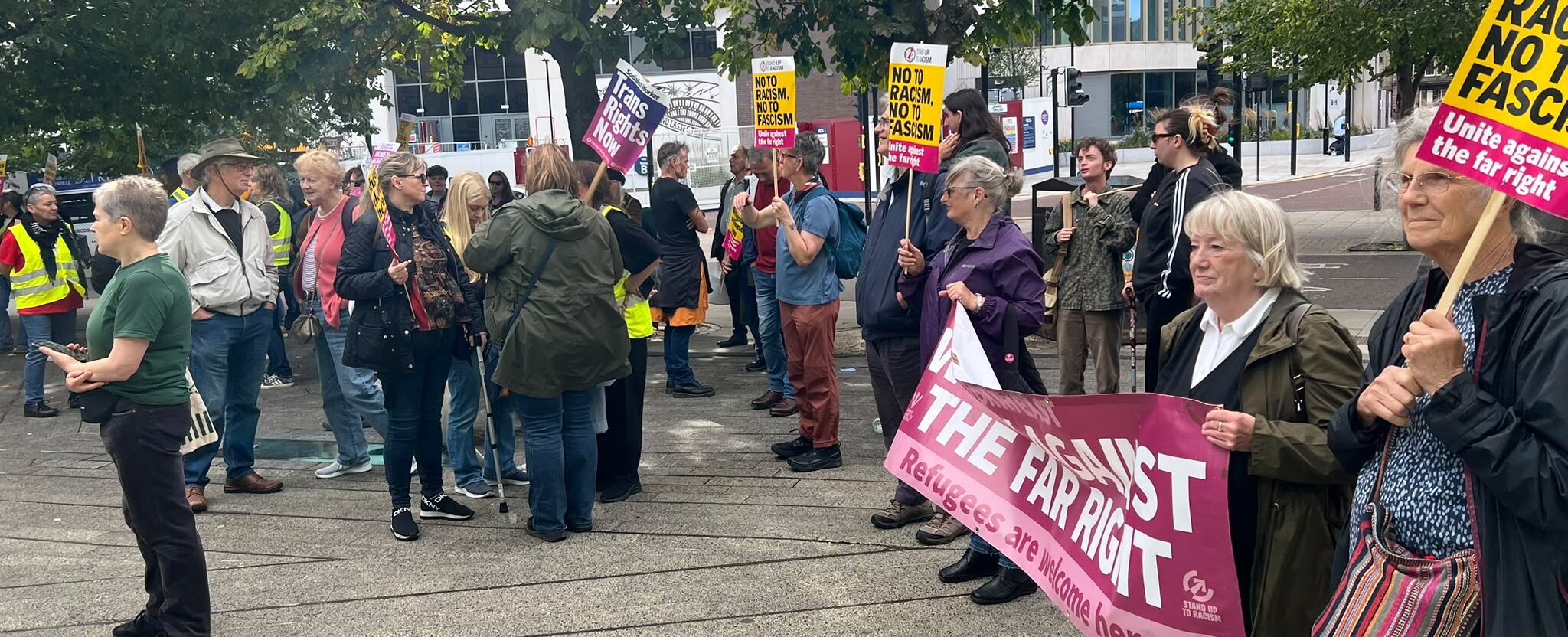
Police introduced restrictions on the movement of demonstrators and powers against face coverings. But the anticipated far-right mobilisation appears to have collapsed almost completely. Contemporary local accounts put the turnout only in the low tens, with one report suggesting around ten.
The far right was heavily outnumbered and failed to establish any significant presence.
That is a useful corrective to claims that every online call now produces hundreds of people.
The movement remains extraordinarily uneven. Its ability to mobilise depends upon place, issue, existing organisation, personalities, amplification and whether an event manages to escape the established activist milieu and draw in a wider local layer.
Portsmouth shows the danger of local crossover
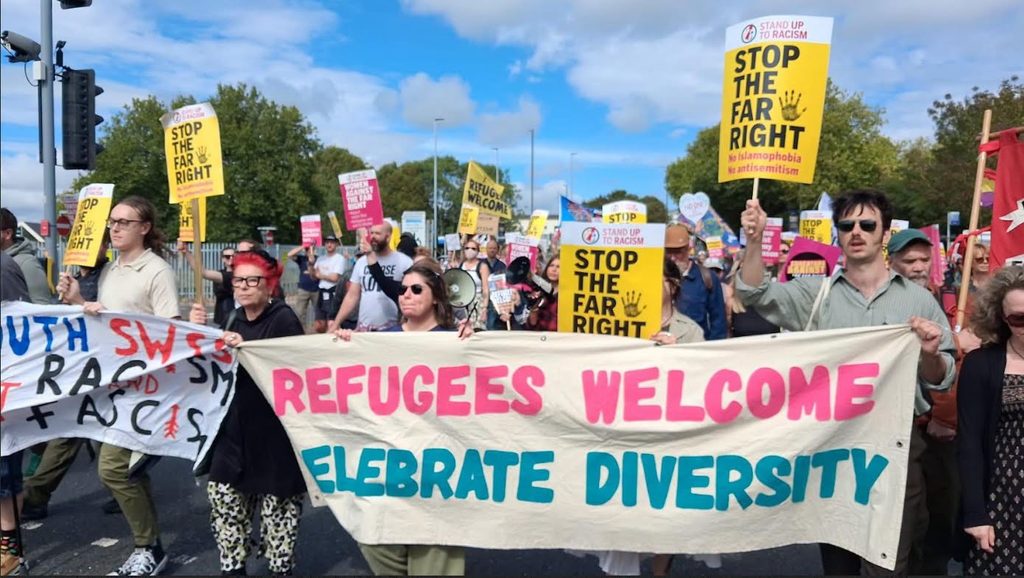
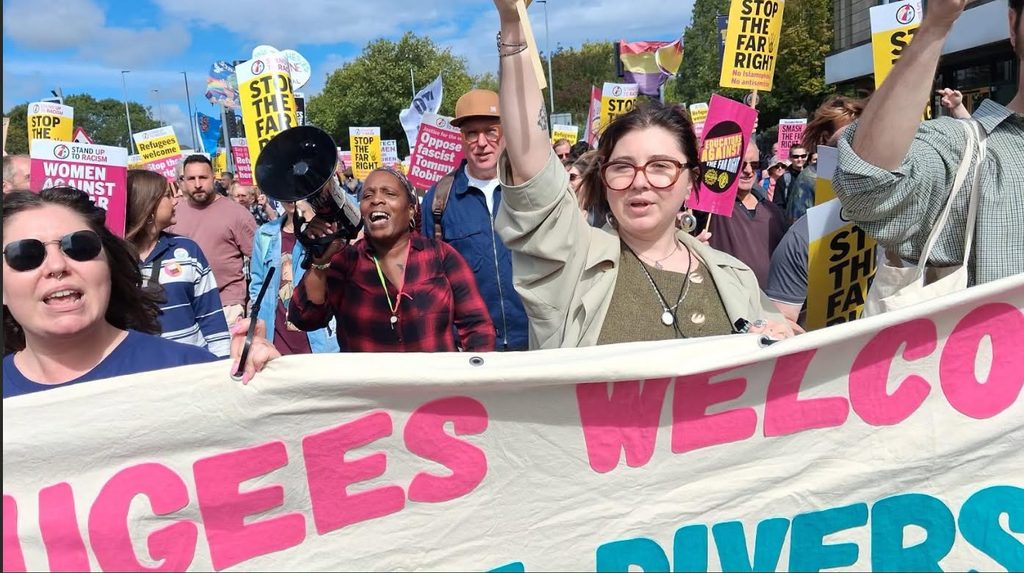
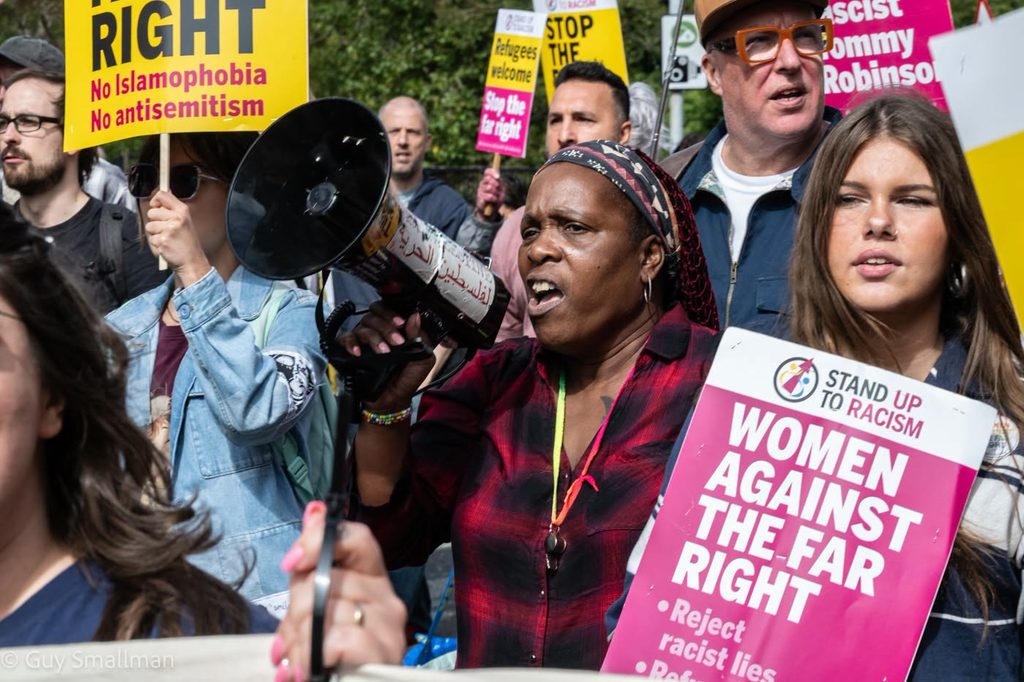
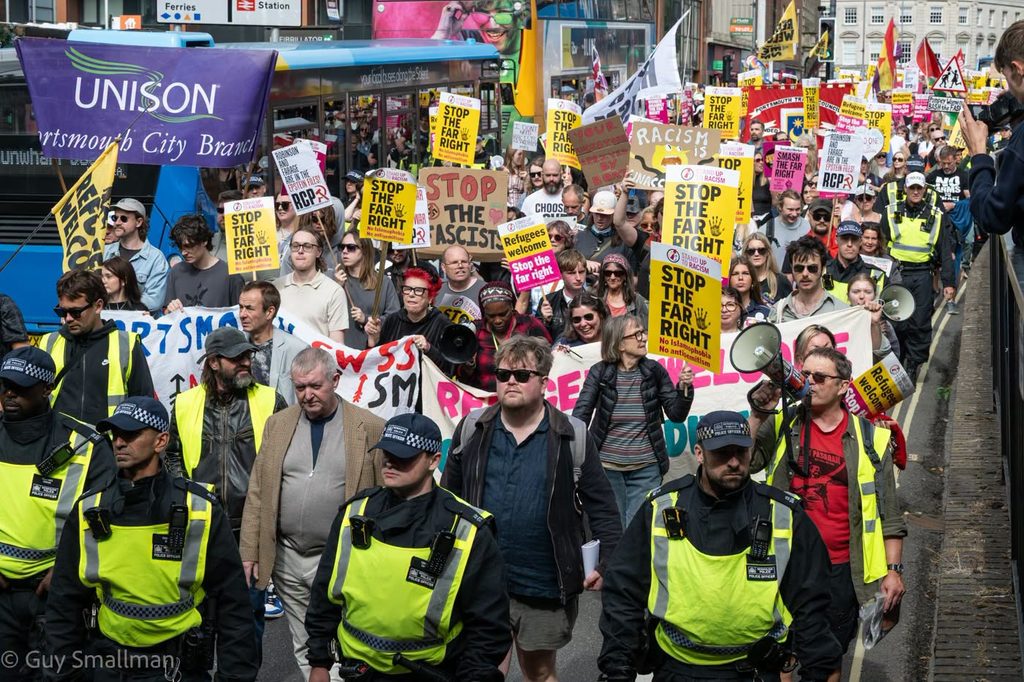
Around 500 people appears a reasonable working estimate for the anti-migrant mobilisation on 12 September.
That was considerably larger than the organised South Coast Patriot core and demonstrates the possibility of pulling local people around an established activist nucleus when an issue is successfully presented as an immediate local crisis.
The previous weekend’s confrontation around migrants landed at Eastney Marina had created exactly that atmosphere.
Patriot Platform formally announced that it was not participating in Saturday’s demonstration.
But politically the two cannot be sealed off from one another.
The spectacular action at Dover and the confrontation in Portsmouth the previous weekend had already demonstrated the possibilities of rapid mobilisation and helped create the environment in which the subsequent march took place.
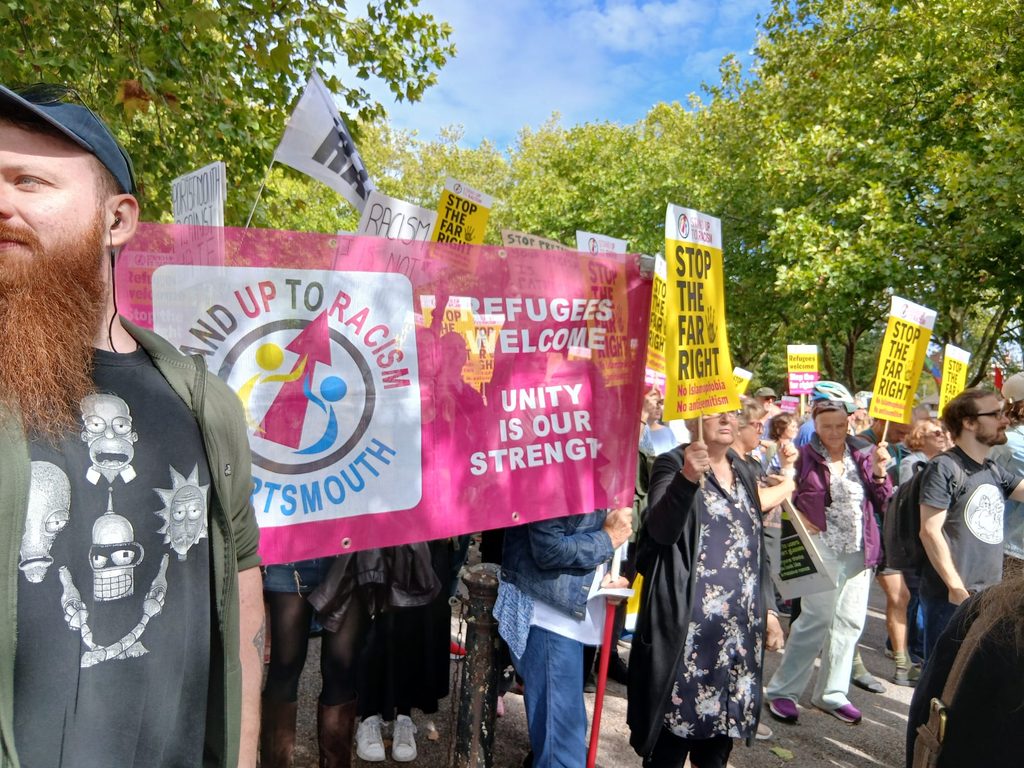
Portsmouth SUTR mustered around 350 and were able to get into the square to go face to face with the right.
Poole shows they can also be stopped
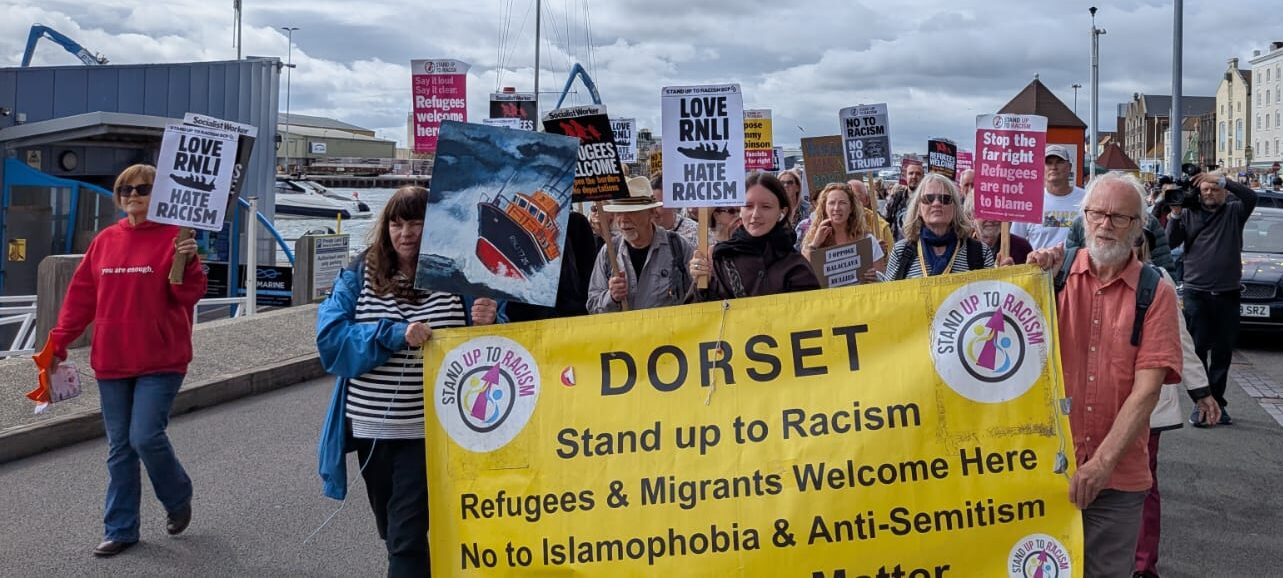
Poole Patriots threatened to march on the RNLI headquarters in Poole—part of a repeated attempt by sections of the far right to target the lifeboat charity over its role rescuing people in the Channel.
Around 120 anti-racists mobilised at the RNLI. Reports from the ground put the far-right as very small.
“On Saturday we organised an emergency RNLI Solidarity demo after the events of the previous weekend in Dover & Portsmouth. We marched along a busy Poole Quay and received a huge amount of support from locals, with supportive cheers and waves. At its peak we had approx 120 people with us, a good amount of which were new faces! We were also joined by the families of a few RNLI volunteers. Our march ended at the RNLI Lifeboat Museum, which was closed for the previous 3 days due to the amount of abuse the RNLI has received over the last week & fears of violence & abuse of staff. We had a small collection, a card, & chocolates for the staff in the museum which were very well received. We’re hoping to use the focal point of the RNLI, which has a huge presence in Poole, to build SUTR further going forward.”
The less visible work: stalls, leafleting and local organisation.
Waltham Forest
We had a lovely Unity Festival at Mornington hall in Chingford.
A lot of our allies and guests gathered for the same purpose. What was enjoyable was the lovely band The Bandits, that played some lovely tunes and a lot of the locals who brought in their children to the park /garden on the side to play.
We had excellent speakers who addressed the history of the anti racism movement from different walks of lifes.
St Andrews
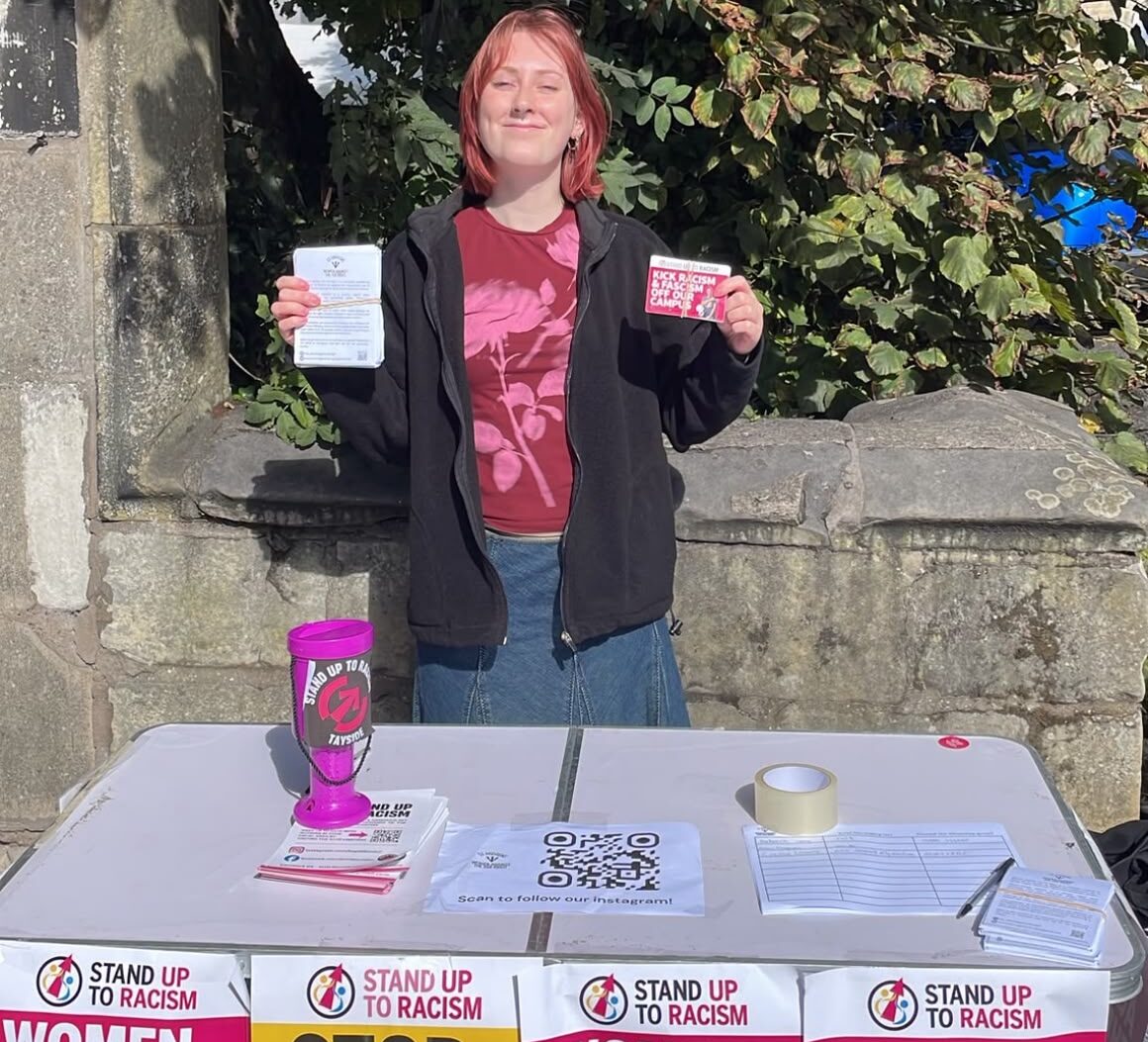
Student anti-racists were out campaigning during Freshers/Orientation Week at St Andrews University. A Stand Up To Racism/Women Against the Far Right stall was set up with “Stop the Far Right” and “Women Against the Far Right” material, alongside a student-focused “Kick racism off our campus” campaign. The activity follows the successful campaign earlier this year by St Andrews Women Against the Far Right against the proposed university Reform UK society.
Monitoring Group Report
A network developing a harder edge
The far right remains fragmented. Pink Ladies, Britain First, Scottish Citizens Army, South Coast Patriots, Patriot Platform and numerous local “patriot” formations have different leaderships, structures and immediate priorities.
But they inhabit an increasingly interconnected political space.
Livestreamers circulate between demonstrations. Influencers amplify one another. Local organisers meet at national events. Tommy Robinson can dramatically enlarge the audience for a mobilisation without directly organising it. Groups borrow slogans, imagery and tactics from one another.
Dover tested whether hundreds could be assembled through restricted communications and directed towards strategic infrastructure. The Daily Mail mobilisation tested whether a much smaller group would turn out rapidly for Tommo himself. The Scottish Citizens Army tried something similar in Glasgow and discovered that political theatre without sufficient organisation produces just 40 people walking into a police containment.
The pauses between actions also argue against imagining a fully developed operational apparatus capable of sustained disruption. But demonstrations can themselves have an organisational purpose. People learn to travel together, receive instructions, recognise leaders, develop rituals and test what the police will tolerate.
Small actions cannot simply be laughed away. But neither should they be inflated.
The danger is real, but so are the far right’s weaknesses—and those weaknesses can be exploited when organised anti-racists establish themselves locally before the confrontation arrives.
Forthcoming Events